The original article was published by cntraveller.com. Read HERE.
Writer: CATHERINE FAIRWEATHER
A one-of-a-kind museum hotel in Jakarta’s Old Town showcases the nation’s historical past to create an experience of five-star hospitality that is as eye-opening as it is different
All listings featured on Condé Nast Traveller are independently selected by our editors. If you book something through our links, we may earn an affiliate commission.
In a nutshell
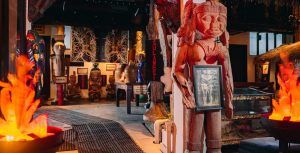
This is the most ‘out there’ hotel that I have ever experienced; a destination in its own right, a fascinating museum that showcases Indonesian Penerakan culture and heritage, as well as doubling as the home of its collector-owner Anhar Setjadibrata. An antidote to the usual generic luxury highrise in Indonesia’s sprawling capital, Hotel Tugu taps into an increasing desire among travellers for meaning, storytelling and authenticity. Nothing prepares you for the joyous excess and eccentricity of the hotel’s interiors, which is why influencers and instagrammers descend here (they created such a stampede at the launch it almost forced a premature closure). The building is a true Tardis, with room after room and casement upon casement filled with the treasures, heirlooms and loot of empires; the cherished trophies of Asian queens, kings, concubines and warlords, from lands as exotic and remote as Xanadu.
Three things I loved
- Fountains and channels filled with the giant carp – the traditional symbols of prosperity and fortune
- Getting lost in the warren of corridors and discovering rooms full of wonders
- The giant reclining Buddha statue and a life-size sculpture of a lion biting a horse and its Arabic rider
Rooms
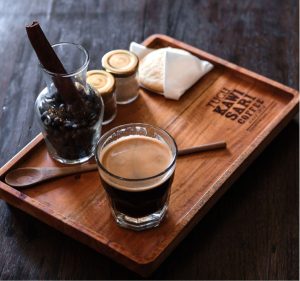
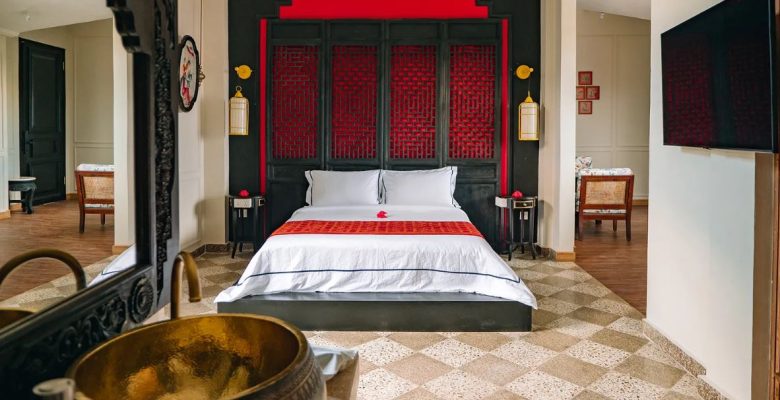
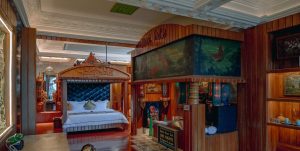
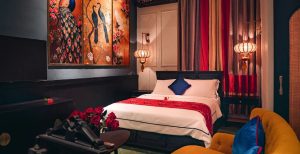
After the communal rooms’ assault on the senses, the bedroom suites are more restful and restrained, though that’s still not enough to encourage Jakaratans – who believe that antique artefacts contain the ghosts and spirits of their ancestors – to stay the night. Each room and suite is different but all have high ceilings, vast beds and desks, rain showers and often copper bathtubs. While many of the rooms look inwards over the pool courtyard, I wanted maximum daylight and was thrilled by my atmospheric Concubine room with huge picture windows, lovely kimonos and matching slippers, and an organic drip coffee machine from Tugu’s own Kawisari Coffee plantation – the oldest in the country. River Suites are a favourite, with terraces facing the old river and across to the colonial facades of Kota Tua (Old Jakarta). There are three signature suites including one named after the building’s former owner, the sugar baron Oei Tong Ham, that is suitably draped in royal blue silk and satin.
Food and drink
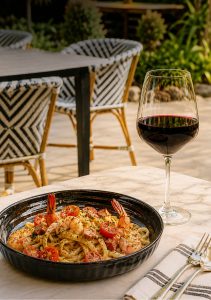
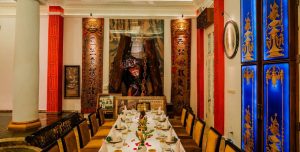
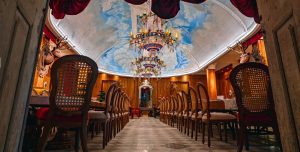
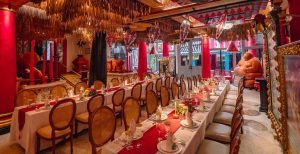
With its cathedral-height ceilings, Japanese Shinto shrine and overhead tree forest sculpture, Jajaghu restaurant deserves a menu offering more than a Caesar salad, and I wasn’t disappointed. I was treated to a range of Peranakan (Malay Chinese) ancestral recipes – slow-braised curries featuring typical Peranakan flavourings such as lemongrass, galanga, turmeric and lime leaves. Treats include smoked rawon short rib bao, or bhun kerapu koh ashung (rice vermicelli and curry sauce with grouper). Mostly, though, I ordered simple Asian comfort food like noodle soup at Babah Koffie by Kawisari, a nostalgic cafe celebrating the Kawisari plantation, Java’s oldest colonial-era coffee estate, which is also owned by the Oei family.
Highlights and experiences
In this visual wonderland, nothing is more enchanting than swimming in the narrow pool between towering banyan trees whose roots wrap around the masonry as frangipani blossoms float in the breeze and dancing Hindu deities – totemic statues from Sumba island – gaze down. Another highlight has to be the daily tour of the artefacts collection. Suni from reception will show you the dozen or more private dining rooms, the ballroom, the Charlie Chaplin suite (he visited the city in 1932), the Ming vases and other delights such as the tiger-headed ceremonial barge and or the giant Chinese dragon and Buddha.
What to do nearby
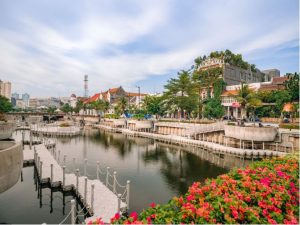
This is old Batavia, the historic name of the Dutch colonial city that grew into Jakarta, the largest city in the world. Kota Tua is all that remains of the original settlement or Old Town. This fascinating neighbourhood, reachable via a stroll over the canal from the House of Tugu, defies the usual metropolitan homogenisation. At its heart is Fatahillah Square where 1830s Batavia Cafe serves great cocktails or brunches (try maize pancakes with yuzu). The cafe’s atmospheric, red-carpeted, mahogany interiors give a wide view of the daily theatre of the square below where the cobra man invites passersby to pet the snake, and locals queue up to be photographed next to street artists dressed up as famous cartoon characters like Snow White and Lucky Luke. The non-squeamish can head to the nearby Chinese Market where boxes of jumping frogs are sold by the kilo next to sea cucumbers or unfortunate baby owls stashed in paper sandwich bags.
The backstory
The hotel foundations are part of The Forbidden House, a 500-year-old mansion so-called because it once belonged to a recluse and remained a fortress closed to visitors. In the late 19th century this wonderful site on the banks of an old canal became the storehouse of sugar baron Oei Tiong Ham, the ‘Rockefeller of Asia’, who married into the Javanese aristocracy. The story of their interwoven lives and ancestry is told throughout Tugu in the artefacts and mementoes collected by Oei’s descendant, Anjar Setjadibrata, a lawyer who travelled around the new Indonesia collecting his native Peranakan (Malay Chinese) antiques in order to celebrate and preserve a cultural heritage and history that was on the brink of erasure. The House of Tugu acts a “custodian of collective memory”, sharing important elements of Indonesian culture.
Insider tip
Book a private spa treatment on the rooftop for its incredible views and leafy hot tub and sunbathing platform. Make time for live Jazz at De Tiger, the sensational speakeasy bar with cobalt blue pillars. Its signature cocktail, the 100 Karung Kopi (coffee tequila, salted strawberry gomme, lemon and milk) is a homage to the roasted bean that altered the fortunes of this dynasty of merchants and art aficionados.
Final considerations
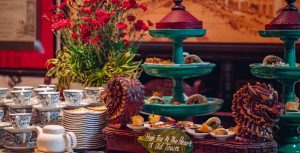
- Can’t-miss: the complimentary cake and biscuits presented on a tiered plate for afternoon tea. It’s fast becoming a sceney Jakarta institution among the locals
- Best for: thinking travellers who are interested in context, stories and texture. Also families, honeymoon couples and influencers seeking instagrammable moments
- Wellness: Kamar Solek Spa at the top of the building excels in ancient healing traditions that promote restfulness and tranquillity. There is also an ice bath, banya and sunbathing platform
- For families: for children the secret corridors and rooms full of surprises are as exciting as Disney ghost trains
- Location: within the world’s most populated city, Kota Tua can feel almost villagey. This district is all that remains of Batavia, the original colonial era settlement. Run down but full of character, it has lively markets, a murky canal where locals still fish, and a working port
- Accessibility: there are ramps for wheelchair access but the hotel’s numerous steps, ramps and corridors will feel like an assault course
- Loyalty Group: it is part of Tugu Hotels, the family-owned luxury group of five art hotels and standalone restaurants stretching across Indonesia, from Bali and Lombok to Java and Jakarta